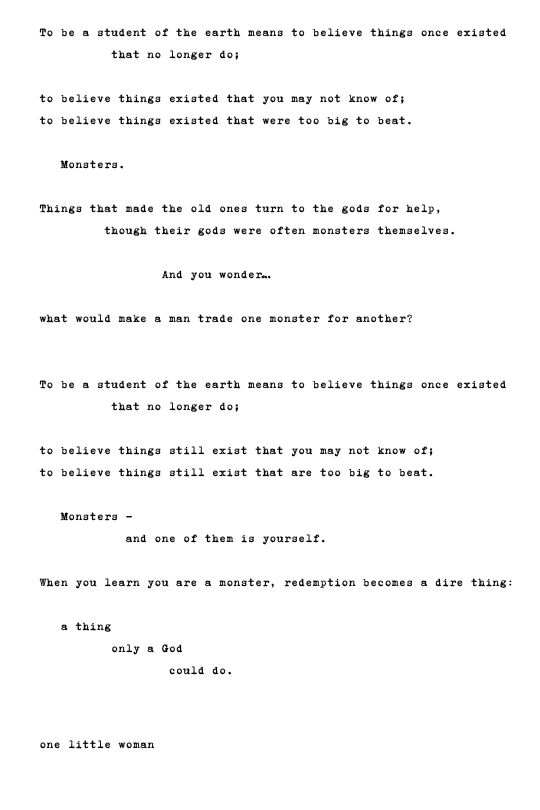
Talk About Trouble: Chapter 2

What mesmerizes me about the book of Job is that it turns out human theology, human reasoning, human religion has stayed almost entirely the same in the thousands of years since this literary masterpiece was written. I could have written entire passages of this book myself, though not as eloquently, because I have felt them. I know exactly how these people feel. I have experiences, moments in my life, that I can attach these words to, and they FIT. Thousands of years of surface changes later – changes of technology, fashion, government, trends, languages, foods, and lifestyles – and the thoughts and feelings of humans remain unchanged. That’s why I am enamored by old literature. We are more alike with the people of the past than we will ever know.

I’m still not talking about Job. But his wife… well. She is definitely relatable.

Sometimes we forget that Job did not suffer all these tragedies alone. There’s another character in this story who just got caught in the crosshairs, unfortunate human collateral, and she serves as a contrast to show how most of us would have responded under similar circumstances. The “control” of the experiment, if you will: Job’s wife. At the beginning of chapter one, Job’s wife was a wealthy woman with ten healthy, happy children and the kindest, most generous husband in all the land. By the end of chapter one, she was destitute and bereft, and that wasn’t even enough for the Accuser. Job lost everything he had (except, notably, his wife, who seems to have been protected under the umbrella of “don’t harm him physically” – after all, “the two shall become one flesh”), and still, the Accuser claimed he only passed the first experiment because it wasn’t a good enough test.

Satan replied to the Lord, “Skin for skin! A man will give up everything he has to save his life. But reach out and take away his health, and he will surely curse you to your face!” (Job 2:4-5)

So Job is tested again in a way that challenges our understanding of fairness. Job would later describe his affliction in these unpleasantly descriptive terms:

My body is covered with maggots and scabs.
    My skin breaks open, oozing with pus. (Job 7:5)

Lest we should think his illness a mild one – it wasn’t.

It is so easy to look at Job’s wife and judge her for what she says to him. This is literally her only moment that is preserved for all of history to judge – and it is her absolute lowest. It is so easy to forget that this woman is traumatized and grieving, in shock, and watching the best man she’s ever known suffer the agony of these horrific sores. His flesh is literally rotting. She loves him, I am convinced she must given who he is, and she is watching him live painfully and die slowly. What would I say to my own husband, who I love completely, in this moment? I would be desperate to stop his suffering, and I believe she is also a desperate woman. Desperate women are prone to saying wrong and foolish things, that’s true. I have been a desperate woman, too. And wow would I hate to be remembered as nothing but my lowest moment.

So remember that’s where she is when she says –

His wife said to him, “Are you still trying to maintain your integrity? Curse God and die.” (Job 2:8)

And so we arrive at the second pinch point of the story. Again, Job is faced with a choice, and in about 15 seconds, after he makes that choice, all of heaven is going to know who he is – for certain this time. That’s how long it takes to make a choice that makes or breaks us. I have always marveled at how long the consequences can last for a decision that takes so little time to make. These knee-jerk reaction choices we make come from within us and reveal us like nothing else does. I crumple when I think of some that I have made, and I know it’s only by the blood of Jesus this weak-hearted woman can be saved.

But Job says (and this is why I think Job’s wife was really all right most of the time – he talks to her like she’s briefly lost her mind, which indicates to me this was outside her ordinary behavior):

But Job replied, “You talk like a foolish woman. Should we accept only good things from the hand of God and never anything bad?” So in all this, Job said nothing wrong. (Job 2:10)

All of this happens in only the first two of forty-two chapters. What does this tell us about the literary work we are about to read? This tells us that the circumstances of Job’s life right now are not the story. They are only the backstory, the catalyst, the setting; the real plot happens in the midst of them. The story is the reckoning that comes after. The story is how these men try to understand what has befallen him. The story is the hearts that are revealed – changed – grown.

Enter: the three antagonists – errr, friends. I mean friends.

When three of Job’s friends heard of the tragedy he had suffered, they got together and traveled from their homes to comfort and console him. (Job 2:11)

I like to think they really had the best intentions. It says so right there – they came to comfort and console him! But wow, did that shot go wide. Made a few of those kind of shots myself, in fact.

But more about wide shots to come.
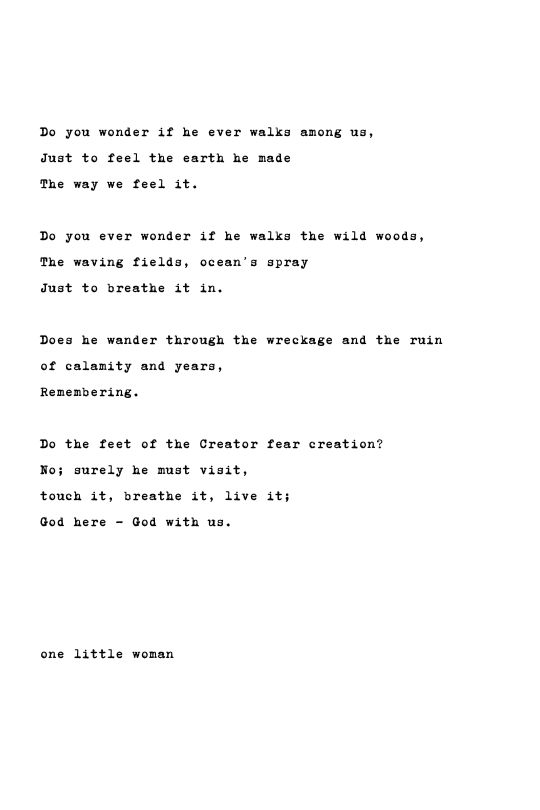
Talk About Trouble: Chapter 1

I have always been mesmerized by the book of Job. It was the first book of the Bible I ever started trying to read by myself, when I was about 8 and had just gotten my first ever little pink Precious Moments Bible. I picked it, I think, because the name was easy to read. Except I mispronounced it, like every child does the first time, and I’m sure when I told my mother what I was reading she found that endearing. I remember she said to me, “The book of Job can be kind of hard to understand.” Misunderstanding her, I said, “I understand it!” I thought she meant the words were hard to read. But of course, she was speaking theologically. And she was right!

I think that’s why Job has ever since been my favorite book of the Bible, although it’s not something I like to say. It sounds arrogant. It sounds like I’m saying I identify with the main character; that I, too, feel righteous and wronged. Quite the opposite, my dears, quite the opposite. I find Eliphaz the Temanite and Zophar the Naamathite far more relatable. I wish I was more like Job, but he’s absolutely baffling. I’ve returned to the book several times over the years, puzzling over the back-and-forth conversation, trying to understand what was so wrong about what Eliphaz and Zophar had to say. Why were they rebuked? I wondered. Weren’t they defending God’s justice as they had always known it? Aren’t their arguments echoed in other places – in the Psalms, in Kings and Chronicles, in Exodus, in the gospels and epistles? Doesn’t Job himself echo what they have to say? Where is the divergence of their beliefs and the truth?

Job is my favorite book because it is so nuanced, so unflattering to me, so difficult for me to wrap my head around. There is something here – it may not be something easy and it may not be something pleasant, but this little book is important, so I cherish it. In it, I find my errors. There is some mysterious truth in these pages I desperately want to understand. The heart of God is here, and I want it.

So yesterday I started reading Job again. I thought I’d just read a little, maybe a little more each day. No one else was home, a rare quiet moment for me, so I read it out loud. I feel like it hit differently that way. The emotion of the characters began to hum, to jump out of the pages. This is how the book was probably first recorded, orally, and how it is meant to be heard. It is one of those stories older than even the written word itself: some part of it dies on the page, I think, but speaking it revives it. The more I read, the more compelled I was to keep reading, to understand what on earth these people are saying. I read the whole book, 42 chapters. It upended my plans for the day, but I could not let it go. What did they say that God rebuked them? So many of their arguments are voices to my own beliefs, past and present. And God rebukes them:

After the Lord had finished speaking to Job, he said to Eliphaz the Temanite: “I am angry with you and your two friends, for you have not spoken accurately about me, as my servant Job has. So take seven bulls and seven rams and go to my servant Job and offer a burnt offering for yourselves. My servant Job will pray for you, and I will accept his prayer on your behalf. I will not treat you as you deserve, for you have not spoken accurately about me, as my servant Job has.” (Job 42:7-8)

His rebuke seems wholly unconnected to their arguments in my mind. Clearly my mind is wrong. I do not like to be wrong about God; it scares me. So I dig in harder, ask the God who is never wrong to open this mystery to me. Help me, Holy Spirit, to understand things you said to men so much wiser than me!

To understand the end, we go back to the beginning.

The book of Job begins by setting the scene for a complex set of poetical, philosophical soliloquys that compare and contrast the widely held theological beliefs of the time. It asks a “what if” question, the basis of all fine literature: what if Job does not get what he wants? Does his faith, does his righteousness dissipate if he does not get his reward for it? Will the good cease to be good if justice ceases to appear just?

I don’t know a lot about a lot of things in this world, but I know something about stories. I come at everything in this world from that angle because it’s the only one I’ve got: I’m not a theologian, I’m not a historian. I’m not a scientist, an engineer, or a mathematician. I’m a word nerd story lover with an obsessive streak and a keyboard. Sorry if you’re getting tired of it, but it’s what I’ve got. This is something storytellers say in the story-making world that I carry with me into Job: “Plot reveals character.” I’ve probably said it here before. We read, we listen, we absorb stories not because we really care about exactly what happens, but because we care about how the characters will respond to what happens. We care about what it reveals about who they are. The Bible is, in my eyes, the finest piece of literature in existence in this way; it lays out the pattern clearly to show us how God has written, not fiction, but all of nature and history to reveal character – his and ours. Like a pair of good glasses that bring the world back into focus, the Bible sharpens the edges of what has happened in our past to allow us to see our God and ourselves, maybe for the first time, clearly.

Then the Lord asked Satan, “Have you noticed my servant Job? He is the finest man in all the earth. He is blameless—a man of complete integrity. He fears God and stays away from evil.” (Job 1:8)

This is where Job begins: God and the Accuser are discussing who Job really is. God claims there is no one on earth as righteous as Job. The Accuser says, “You get out what you put in, God. He’s only good because you’ve given him good things.”

Satan replied to the Lord, “Yes, but Job has good reason to fear God. You have always put a wall of protection around him and his home and his property. You have made him prosper in everything he does. Look how rich he is! But reach out and take away everything he has, and he will surely curse you to your face!” (Job 1:9-11)

God, being the scientist that he is, allows this hypothesis to be tested. He knows what the result will be. But knowing that others will eventually reach the same upside-down conclusion, ready to demonstrate once and for all the error of the claim, he allows the scientific method to reveal it.

Here is the scientific question: is goodness a result of gratification only, or does it exist independently? Separated from its reward, will Job’s righteousness cease to exist? Why does he do what he does?

What – in short – is Job’s motivation?

The Accuser thinks it is health and wealth, external goodness that manifests by internal goodness – material possessions, comfort, success, honor, ease and plenty – if you would just give us all what we want, Lord, we all would be as good as Job. (Go on, tell me you’ve never heard that argument.) If, then, Job’s actions get him what he wants, only if they get him what he wants, he will continue doing them.

But God thinks there is something more. God thinks there is another reason Job does what he does. God thinks Job’s motivation is anchored in something firmer: conviction in God’s existence and consequent right to do as he chooses, and complete, pure, unshakeable trust in his Master God. Job, simply put, has real faith. Faith not in the circumstantial outcome, but in the character of God.

There is only one way to test this. They must separate the man from the reward. For the sake of clarification, for the sake of revelation, to silence the Accuser and all who would follow in his thinking, for the good of even us who would read it forever after, for a depth of just, perfect reasons beyond these, beyond what our human minds can even hold – God allows Job to be tested.

This is where we first trip.

Is this just? God allows Job to be tested. God allows Jesus to be killed. Who is this terrifying God, and what does it mean to serve him?

Job stood up and tore his robe in grief. Then he shaved his head and fell to the ground to worship. He said,

“I came naked from my mother’s womb,
    and I will be naked when I leave.
The Lord gave me what I had,
    and the Lord has taken it away.
Praise the name of the Lord!” (Job 1:20-21)

Don’t worry. This is the pinnacle of literature, the story we wait on baited breath to hear. All will be told in due time.

Talk About Trouble: Intro

On this frigid January morning when I arrived to drop my daughter off at school, the staff and volunteers weren’t ready for us. At the designated drop off time, the cones were still on their dollies, the vests were still hung, and no one was there to greet or check in our students. The line of cars wrapped around the parking lot, waiting.

The question loomed in front of us all: what do we do now?

Little do we know how much our responses to the hiccups in our day reveal about our characters. Little do we know how far most of our responses are from God’s hopes.

A boy got out of the car in front of us, one of my daughter’s classmates. He’s twelve. I know because she went to his birthday party a month ago. He had a coat, but no hat or gloves, and the moment he stepped out of the car he already looked cold. He jogged across the parking lot as we all speculated where he was going. Was he going to tell them his mom had to get to work, could they please hurry up? Was he in desperate need of a bathroom?

“He’s probably going to help,” my daughter, who knows him, said.

Sure enough, a moment later, he reappeared in a vest and started helping set up cones. It’s not his job. It’s never been his job. No one else was doing it. No one asked him to do it. No one expected him to do it. He did not come prepared to do it. But he saw others struggling to accomplish the work, for whatever reason, and it was within his power to help – so he helped.

What can we bring to the Lord?
    Should we bring him burnt offerings?
Should we bow before God Most High
    with offerings of yearling calves?
Should we offer him thousands of rams
    and ten thousand rivers of olive oil?
Should we sacrifice our firstborn children
    to pay for our sins?

No, O people, the Lord has told you what is good,
    and this is what he requires of you:
to do what is right, to love mercy,
    and to walk humbly with your God.

Micah 6:8

And it struck me, thunder and all – that’s what Job means. That’s the difference between righteousness and its knockoff, hypocrisy. The difference between the real God and his countless imitations. Righteous men do not stop to think what they can gain by right action; God does not stop to think what reward he will receive for his goodness. He acts good because he is good. Job acted righteously because he was righteous. They need no reward to continue acting the same because it is what they are. The rewards they receive are only joy added to the joy of acting according to their being.

It’s all about motivation. I say it all the time, so I’ll say it again: it’s all about motivation!

What moves me to act the way that I act? What moves God to act the way that he acts? What is our motivation?

That is the question. (Sorry, Hamlet.) The answer to it reveals what is so well buried by our actions, by our accomplishments, by our outward appearances: our hearts. The revelation, purification, and reconciliation of our hearts with God’s heart is his ultimate purpose, the good thing his good heart wants to accomplish because he is good.

So, he allows us to be tested to reveal what we are made of. And one of the clearest ways to reveal our hearts is how we respond to trouble: our own, and that of those around us.

This morning, I saw a twelve year old boy meet God’s hopes for us all: when others struggled with the weight they carried, he did not mock, disdain, or complain about their weakness. He did not wait to find out they had a good reason before he would help. He did not stand in superiority over them and demand they meet some unrealistic, unhuman standard of strength, believing he could do better in their place. He was not entitled to their work or critical of their failure. He did not consider why they were late and whether or not they deserved to suffer the consequences of it. He just zipped up his coat, got out of the car, and helped.

So let’s talk some more about trouble. Let’s talk about Job. Let me talk about what I found.

Power Made Perfect

When I was little, we spent a good amount of time at the Christian bookstore. I loved the little knickknacks they sold there; delicate teacups and wall hangings with Bible verses on them, holographic bookmarks, name cards with name meanings and verses, pens and erasers and journals and gum and whatever little baubles they could slap a verse or clever saying on and call it “inspirational.” I bought a magnet once that had a puppy leaning sleepily on a dumbbell and saying, “If it can’t be easier, Lord, help me to be stronger.” For a long time, I thought that attitude sounded pretty holy.

I have lived around strong enough people in my life to know I am far from the strongest of people. I am the youngest in my family: weakest. I am the girl among the boys: weakest. I am the shy one: weak. The quiet one: weak. The bookish one: weak. Weak, weak, weak.

As an adult, I wrestle with less obvious kinds of weakness every day. I am the disorganized one: weak. The time blind one: weak. “Irresponsible,” people who grow frustrated with my weakness say. “Childish. Lazy.” And I hear what they don’t say: weak.

I hate watching nature documentaries because I see what happens to the weak in a world full of stronger things. I’m not a fool. I know I’m the one the predator targets. I know I’m not the one who wins the fight.

God and I have had many a discussion about my weakness. They tend to go like this: “God, why did you make me so weak? If it can’t be easier, Lord, help me to be stronger! I need to be STRONG!”

And God says: “My grace is sufficient for you, my power made perfect in weakness. Why do you need to be strong?”1

And I say, “But God. People are angry at me. They’re angry at me for being a burden, for being so weak that I tax their strength. I ask too much of them. I need to be stronger! I need to pull my weight.”

And He says, “The strong ought to bear with the failings of the weak, and not to please themselves. Blessed are those who have regard for the weak. I chose the weak things of the world to shame the strong. Why do you need to be strong?”2

And I say, “But Lord, Your word says, “Be strong and courageous.”3 I need to be strong. I need to be strong so I can help the weak.”

And He says, “Be strong in me, and in MY mighty power. My power is made perfect in weakness. You have the strength to help the weak; you have Me. Why do you need to be strong?”4

And then I start to really think about his question. Why do I need to be strong? So I can take care of myself. So I won’t need help. So I can be impressive, not disdained. So I won’t be vulnerable. So I won’t be hurt anymore. So I will be safe.

And He whispers, “So you won’t need Me.”

And that’s it, isn’t it. I want to be strong so I can be independent from God. I want to be what He is so I don’t need Him.

And I feel His heart go quiet and sad. Because not only is He strong, He wants to be strong for me. He wants to give me the gift of His strength. He wants to show me His love this way. And I keep insisting that’s not enough for me. What an ungrateful way to treat a gift of love.

And what of this: what if God has allowed me to be weak to reveal the hearts of the strong? What if I am a challenge, a question: What if you were the strongest one? That may be the hardest test a soul can take. What would you do in God’s shoes? My weakness asks the strong. What would you do with His power? Will you spend your strength for yourself, or use it instead on me? How many strong people have flunked the test of the weak! Look at the cruelty splattered across the pages of human history, across our cities, in our streets, in even our homes, from one side of the world to the other and back again. What if my weakness exposes others’ wickedness so that humankind can repent – confess – be healed! What if it makes us marvel all the more at God, strongest of us all, who is never, ever cruel.

And God whispers, “Will you help them see Me? Will you be weak?”

All right, Lord. If my weakness reveals Your glory, then if it can’t be easier, be strong for me. If it can’t be easier, be my stronghold, my refuge, my strength! If it can’t be easier, then Christ’s power rest on me. Mine will be the witness of the weak.

Even the weakness of God is greater than man’s strength!5

“This is what the Lord says:

“Let not the wise boast of their wisdom
    or the strong boast of their strength
    or the rich boast of their riches,
but let the one who boasts boast about this:
    that they have the understanding to know me,
that I am the Lord, who exercises kindness,
    justice and righteousness on earth,
    for in these I delight,”
declares the Lord.” Jeremiah 9:23-24

  1. 2 Corinthians 12:9 ↩︎
  2. Romans 15:1, Psalm 41:1, 1 Corinthians 1:27 ↩︎
  3. Joshua 1:9 ↩︎
  4. Ephesians 6:10, 2 Corinthians 2:19 ↩︎
  5. 1 Corinthians 1:25 ↩︎

Denying the Undeniable God

“Then the Lord gave these instructions to Moses: “Order the Israelites to turn back and camp by Pi-hahiroth between Migdol and the sea. Camp there along the shore, across from Baal-zephon. Then Pharaoh will think, ‘The Israelites are confused. They are trapped in the wilderness!’ And once again I will harden Pharaoh’s heart, and he will chase after you. I have planned this in order to display my glory through Pharaoh and his whole army. After this the Egyptians will know that I am the Lord!” So the Israelites camped there as they were told.” Exodus 14:1-4

My heart squeezes sadly a little every time I hear the Lord say, “Then they will know that I am the Lord!” Do you hear it? Can you hear it in His voice? His desire to be known by the people of his own creation is intense, real, heartrending. Do you ever wonder why he has to go to such great lengths to get people’s attention, to reveal himself? And do you ever read this repetitive phrase – “Then they will know that I am the Lord” – and wonder… but will they?

Because if there is any one power humans have in excess, it is denial.

Look at what God did in Egypt prior to this chapter. He turned off the sun. He turned an entire river into blood. He wrecked their livestock with hail, their produce with bugs, their health with boils, their futures with the death of EVERY firstborn son in Egypt. And yet – Pharaoh, who had been convinced for a moment that he was dealing with a powerful God, once again, changed. his. mind. And came after God’s people, again.

On the one hand, I can’t wrap my head around this point: God turned off the sun, and Pharaoh still didn’t get who he was dealing with. On the other hand, I’ve seen miracles too. I know how hard I’ve prayed for them, and I know it was God who came through. And yet… was it? Was it really? Or did I just get lucky that one time, or did I just work harder than I had before, or was it doctors or politicians or my family or… actually ME who really made it happen? When God uses human hands to meet my needs in miraculous ways… to whom does the credit really belong?

Chances are good that when things go my way, I’m going to find a way to convince myself it was my own doing.

Oof. But it’s true.

So how, then, am I ever going to know who God is when I keep attributing his actions to myself?

Oof.

Well. Human denial can go a lot farther than it should. But it has its (extreme) limits, too, I hope.

Sometimes, to teach us denying humans the undeniable goodness and power of the God we serve, he has to make it really, really obvious.

Sea-splitting obvious.

So he lets us get trapped in a vulnerable location. He himself commands us to go there. He actually tells us to set up camp at Pi-Hahiroth, fully knowing how vulnerable a location it is, knowing that Pharaoh will think we are confused, and knowing he is the only, only Being in all of creation that could pull off what he’s about to do.

Picture it: the people are trapped, completely trapped, between Pharaoh’s army, the most advanced, well-fed, well-funded human army in the world, and the sea. Not the sort of thing that can be forded or swum across, you feel me. No bridges. No boats. No way around. No way out. TRAPPED. With their weak and vulnerable loved ones. With their elderly, their sick, their pregnant women, their children. And beginning to fondly remember their nice cozy (slave) beds in Egypt… because the fact of the matter is, they were about to die out there, in the wilderness. Everything they had feared, every fear that had kept them too scared to leave Egypt until now, until they courageously chose to trust God and head into the wilderness, believing he wouldn’t let it happen, that he would take care of them, that all these horrible things humans had experienced in the wilderness before would not happen to them – well. It was happening, all of it was happening. They were out of their own strength, running on empty, depleted, exhausted, done for. And they knew it. Surrender and suffer, or don’t and die. These were the choices that were within their power.

And that’s it, isn’t it? Never do we ever consider choices outside our own power. We can’t make it work, so surely God can’t either, amiright? I mean, it’s just math. It’s just science. It’s just reality. Some things just. can’t. happen.

“Then the Lord said to Moses, “Why are you crying out to me? Tell the people to get moving! Pick up your staff and raise your hand over the sea. Divide the water so the Israelites can walk through the middle of the sea on dry ground.” Exodus 14:15-16

I’m sorry, divide the what now? What do you mean why are we crying out to you?? Get moving WHERE?? Divide the WHAT. NOW. Have you ever tried to cut water in half? I don’t mean pour one cup of water into several containers, I mean grab a knife and try to cut the water – with a knife. Divide the water. Sure, yeah, why didn’t I think of that.

There are just some things even the most ignorant of us know cannot happen. It does not exist.

But God did it.

And in that moment… they knew. The whole world, for a moment, knew.

I know where I’m trapped in my life. I know the corner I’m backed into, and I know that everything I’ve tried to do to get out of it has failed. I know where I am – I’m camped at Pi-Hahiroth, between Migdol and the sea. The location is vulnerable, and the enemy is – gleefully – coming to take advantage of my folly. There is no escape.

…Or is there?

Lord, rip open the water in front of me. Walk me through it, and let it drown my enemy. I know you’re coming. Let the denying world be silenced and stand in awe and reverence. Be undeniable. You are God.

May we, forever, know it.

Do You Recognize Me?

Then they cursed him and said, “You are his disciple, but we are disciples of Moses! We know God spoke to Moses, but we don’t even know where this man comes from.”

“Why, that’s very strange!” the man replied. “He healed my eyes, and yet you don’t know where he comes from? We know that God doesn’t listen to sinners, but he is ready to hear those who worship him and do his will. Ever since the world began, no one has been able to open the eyes of someone born blind. If this man were not from God, he couldn’t have done it.”

John 9:28-33, NLT

Have you ever seen an acquaintance in the grocery store, at a child’s game or dance performance, at the playground, or somewhere else you don’t usually see them? You get that feeling, that don’t I know you? feeling, but you just can’t place them. They’re out of context. Usually you see them at church, and here they are at a dance recital. Usually they’re at your child’s school, and here they are at the grocery store. Usually they’re at work, and here they are at the playground. Without their context, they look familiar, but… why? It can be hard to recognize people when the setting changes.

The God of Israel hadn’t spoken anything new to the people of Israel in 400 years. They had meticulous records of all He had said to them throughout history, and they combed them over and over again. They had the Temple, the religious ceremonies, the holidays, the symbolic ways they worshiped Him every day. That was the setting they knew Him in.

But it had been a while since they’d seen Him move among them in the grandiose ways they read about, since they’d heard the authority in His voice, and there were plenty among them who’d decided to step in to fill the void. They’d set themselves high above the people, put on the robes, and claimed to have all the answers, to be the path to holiness, to salvation. They tried to wear His shoes, though they could never really fill them.

The question became: Would God’s people recognize the real Him when He came? Or would they choose the men who had painted themselves as gods among them?

Because when He came, He looked nothing like the people wearing the mask that was supposed to look like Him. He spoke nothing like them. He dressed nothing like them. He acted nothing like them. He valued different things. And He had real POWER – power they did not have. Power to feed thousands with a few loaves and a couple of fish. Power to calm storms and raise the dead. Power to restore sight to the blind. Power to forgive sin.

And here, in John 9, is a man born blind seeing, maybe for the first time, the men behind the masks. How do you not recognize Him?? He could not understand. He had been blind all his life, but he could feel what he could not see: power. He knew who had never been able to heal him (everyone else), and he knew who did. Jesus. Carrying the mark of the God he’d always heard about – real power. Why could they who taught the Scriptures not see the main character standing right in front of them?

Because remember, in their impatience as they waited and waited for their God to speak again, they’d started writing their own Scriptures in His stead. They’d started believing their own words as equal to His. And He broke the promises and rules they’d written with His pen. They didn’t recognize Him – because He didn’t look like them.

But a man who’d never seen their faces was hard to fool with their disguises.

This year, as the year ends and a new one begins three weeks from today, I’m wondering how much of what I’ve believed about God I wrote myself with His pen. What promises have I made for Him? What rules did I add to His? When He comes, when He acts, when He shows real power in my life… can I even see it through the God mask I’ve made to wear over my head?

I want to know exactly where this Jesus man comes from when I encounter Him. Lord… I want to see.

Bethesda, Part One: Him

From John 5 – imagine this with me

I lie outside, on the ground by the Pool of Bethesda. It is HOT, and the ground is hard, making me ache anywhere I can feel my body touching it, but I do not move. I barely can, and it is not worth the effort. There is no comfortable way to lie here. At least they built some colonnades for shade.

The sores grow where my body rests on this mat, but I can only shift so much, and there are sores there, too. I am filthy, but no one cares to wash me, and I cannot. What does it matter? No one looks at me anyway. They all know who I am, and they all know I am here. But no one looks. I have been broken now for thirty-eight years; I know exactly how long – or short – human compassion lasts. I know what it looks like when it runs out; charity satisfies its own conscience long before it satisfies real needs. “God will help him,” they say to comfort themselves so they don’t have to anymore. They’re tired of my needs. I can’t even blame them. I am a heavy load to carry.

So now, I am sitting beside the pool of God’s “help.” That’s what they called it, years ago. “There is a pool in Jerusalem by the Sheep’s Gate. Sometimes an angel comes to stir the waters, and if you are the first person into the pool after that, you will be healed!” They dangled the hope of healing in front of my eyes, and like a fool, I reached for it.

Hope deferred makes the heart sick.

This plays on loop in my mind. I’ve heard the proverbs of Solomon my whole life. When people run out of their own wisdom, they grasp for someone else’s, and no one has their own wisdom to help me anymore. They don’t know what to do any more than I do, and I can’t even blame them. Can a human help where God will not?

I have seen the angel stir the waters. I have seen people get healed, people who had others to help them into it. Hope is real – healing is real – just not for me. God may heal broken bodies, but what can he do with my rock hard, sun-baked, cracked clay soul?

My heart is sickened by this pool of hope.

Let the others have it. There are people here at this pool, broken people, who do still have hope, who have people to help them. People who actually want to help, people who haven’t given up or been turned off yet. I pushed all of my people away years ago. Sometimes I am still angry at them for leaving me. Other times – I just can’t even blame them! I am so angry, so hurt, so needy. So cruel. What reason did I give them to stay?

-but-

A man walks up to the pool and looks at me. He must be new here; I hear him asking people about me. I see their furtive looks, I hear them answering his questions politely: coldly, but politely.

The man comes and sits near me. I do not look at him, but he keeps right on looking at me. I feel the filth he must see.

“Do you want to be healed?” He says to me.

What kind of question is that? Do I want to be healed? Why else would I even be here? What, does he think I haven’t tried, that I haven’t done everything everyone else has done, that I haven’t thrown every last hope at this broken body of mine?

…And why has no one ever asked me that before?

Do I want to be healed?

Thirty-eight years is a long time to live broken. It’s a long time to learn how shallow the pool of human compassion is, and it’s a long time to sit beside hope and wonder if it’s even worth trying at all. Hope deferred and deferred and deferred made my heart sick – very sick. I’m not sure it’s worth it to try anymore. No one else cares if I am healed. I’m not even sure I care if I am healed anymore… or if I just want to die and be rid of it all.

I have never said those words to anyone. But when he asks me if I want to be healed, I am so surprised I look him in the eye – and I think he knows.

Pivot!

“I have no one to help me,” I say. “When the water is stirred, someone always gets in before me.”  

He doesn’t say anything for a long time. I look up to find him staring at me. He knows I did not answer his question, and so do I. The sorrow there is profound. I wonder if that’s what my eyes look like. Maybe that’s why no one looks at me.

He stands up suddenly. “Get up,” he says, as if to say enough of this. Enough moping. Enough pity. Enough despair. “Pick up your mat and walk.”

I almost laugh at him. But at that moment, life comes back into my dead limbs. I am too astonished to laugh. I move them; I stand up; I pick up my mat;

I walk.

Thirty-eight years I have laid here broken, asking for a miracle. Thirty-eight years, broken, forgotten, alone. Then in one moment. ONE. MOMENT. It took years for my heart to die, and only a moment for it to come roaring back to life.

…but a longing fulfilled is a tree of life.

This man must be from God.

I look up to find him, but I find the Pharisees instead – the Pharisees, who call themselves men of God. Men who refused to help me because they did not want to muddy their hands with “God’s judgment on sin,” which is what they called my brokenness. But here I am, set free by God himself.

“It is the Sabbath; it is illegal to carry your mat.”

Really? Really?? These men know me. They know I have been paralyzed for thirty-eight years – they know I was paralyzed this morning. Do these men not recognize the hand of God when they see it?

“The man who healed me told me to pick up my mat and walk.” Forgive me if I side with him.

I am healed. How are they missing this? God alone can heal!

“Who is this fellow who told you to break the law?”

I AM HEALED –

…And then I realize. I did not even ask the man his name. I am no better than any of them, any of the people who left me alone beside the Pool of Bethesda. I am so wrapped up in myself… that I missed the living pool of compassion deep enough to heal me.  I missed the miracle standing in front of me.

I don’t even know my miracle’s name.

I have to find him. And I can. I can find him because I am healed.

I run all over Jerusalem, but I cannot find him. The crowds are too thick. He is nowhere. For the first time in years, I see the temple. The temple of the God who healed me. In a jolt of gratitude, I rush inside it to make an offering for my healing.

He finds me there. It’s like he was waiting for me. He is from God; I should have known I would find them both here.

“You are healed now. Go and stop sinning, or something worse may happen to you.” He knows? He knows… and he healed me anyway.

Now I know who he is. He’s the one they keep talking about, the one the people love and the leaders hate. He is Jesus.

I’m not sure why I did it, why I told the Pharisees. Maybe it was revenge; these men who had gloated over the consequences of my sin were finally being put in their place by this man. Maybe it was fear; I passed the buck to Jesus for the law I had broken, hoping he could handle their ire better than I could. Maybe I thought I could convince them to follow Jesus with my story. Or maybe I just hoped they would like me a little better if I did. But I told them, and they didn’t like me better. They didn’t like him any better, either. I told them he healed me, and it just made them hate him more. How?

It’s funny. I spent thirty-eight years praying for a miracle, and when it finally came… it didn’t do what I expected it to do. It didn’t solve my problems. It didn’t create faith, or draw the praises of God from other’s lips. But it did show me something new about the people around me. It did show me something about myself.

And it showed me everything about God, and the Son He sent.

Because the real miracle wasn’t the healing of my body… it was the man who took the time to look at me. To meet my needs.

The miracle was compassion.

The miracle was Jesus.

It was always Him.

*Proverbs 13:12 – “Hope deferred makes the heart sick, but a longing fulfilled is a tree of life.”